



Innovating for the future: technology in credit unions

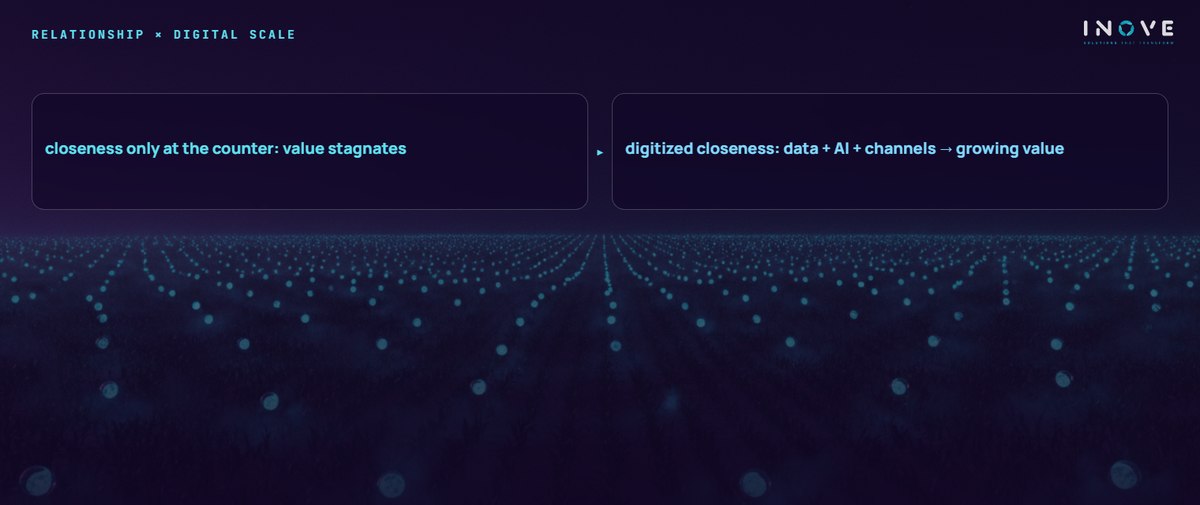
Credit unions have always won on closeness: the manager knows members by name, credit decisions weigh personal history, results flow back to the community. The challenge is that big banks have learned to simulate closeness at scale — with a flawless app, instant service, and AI-personalized offers. Competing on that board demands technology to match.
The good news: a credit union does not need a retail bank’s budget to play this game. It needs to pick its battles well. In this article, we show where technological innovation changes the outcome for credit unions — and how to turn the closeness that already exists into a digital advantage.
The digital challenge, without the drama
Today’s member compares the credit union’s app with the best app they use — from any industry. Instant Pix payments (Brazil’s real-time payment system), a virtual card on the spot, a loan approved on the phone: these are no longer differentiators, they are the expected minimum. When the digital experience disappoints, not even the best rate keeps the young member around.
Chasing every bank novelty, however, is a losing race — banks will always have a bigger budget. The winning strategy is different: deliver the digital essentials with quality and concentrate innovation where the credit union is unbeatable, which is the relationship.
Closeness as data, not just as a slogan
The credit union knows things about a member’s financial life that the bank does not. The problem is that this knowledge usually lives in the manager’s head — not in the systems. When it becomes organized data, the magic happens: credit analysis sees the full history, offers arrive at the right time, and digital service speaks with context.
Generative AI also multiplies the team’s reach. Virtual assistants handle routine matters at any hour and pass the baton to a person when the topic calls for judgment — with all the context attached. The agent then does in minutes what used to take half an hour of system work.
Efficiency: the member doesn’t see it, but feels it
Half the innovation that matters happens backstage. Process automation in administrative routines, system integration, and cloud infrastructure lower the cost per operation — and lower cost becomes a better rate and a bigger surplus for the member. It is operational efficiency funding the cooperative purpose.
Well-built digital platforms likewise shorten the cycle for new products: digital payroll-deducted credit, automated investing, account opening in minutes. When the technology foundation is good, each new service costs less than the one before. It is the kind of groundwork we handle in our software and application development practice.
Security: trust is the asset
No financial institution survives losing its members’ trust. With scams growing ever more sophisticated — many already supercharged by AI — the credit union needs layered cybersecurity: strong authentication, continuous monitoring, rehearsed incident response, and constant member education against fraud.
The now-mature LGPD, Brazil’s data-protection law, also demands real data governance. Treating member data well is not just a legal obligation: it is consistency with the message of an institution that presents itself as the one that cares for people.
The mindset that makes the difference
- Start with the member — prioritize what removes friction from their life, not what wins innovation awards.
- Prove small, scale with method — then, a pilot with a clear metric before the big investment.
- Bring the team along — internal resistance kills more projects than lack of budget.
- Choose good partners — finally, financial-niche technology calls for people who know the sector, not a generic vendor.
Digital transformation, then, does not threaten the credit union’s identity — it amplifies it. We work with credit unions and see it in practice: when technology digitizes closeness instead of replacing it, the credit union competes head to head with the big bank — and remains the institution members feel is theirs.